Solar repair & troubleshooting
A solar system that under-produces may be quietly costing you money month after month. The good news: most production problems have a specific, findable cause — and it is rarely "you need a whole new system."
Common problems we track down
System producing little or nothing
A failed inverter, a tripped breaker, a blown fuse or a wiring fault can take a whole system (or one string of it) offline while everything looks normal from the ground.
Inverter errors
Error codes and red lights point at specific faults — grid issues, ground faults, overheating or a unit at the end of its life. See inverter replacement.
Production slowly dropping
Gradual decline can be failed optimizers or microinverters, damaged panels, heavy soiling, new shade from growing trees — or a monitoring gap hiding a bigger fault.
Monitoring offline
If the app stopped reporting, you cannot tell a healthy system from a dead one. See monitoring not working.
Battery not charging or discharging
Settings, firmware, a failed component or a changed rate plan can all leave a battery idle when it should be working for you every evening.
Roof work coming up?
Panels sometimes need to come off for a re-roof and go back on correctly. The installer handles panel removal and reinstall, and coordinates with its roofing partner.
What a diagnostic visit covers
- Production check. What your system is making now vs. what it should make for its size, age and location.
- Component testing. Inverter, optimizers/microinverters, wiring, breakers and batteries tested to isolate the fault.
- Clear findings and price. What is wrong, what it costs to fix, and what can wait — agreed before any repair work starts.
- Warranty check. If a failed part is still under the manufacturer's warranty, The installer helps with the claim.
The installer services systems it installed and systems it did not — including orphaned systems whose original installer is gone.
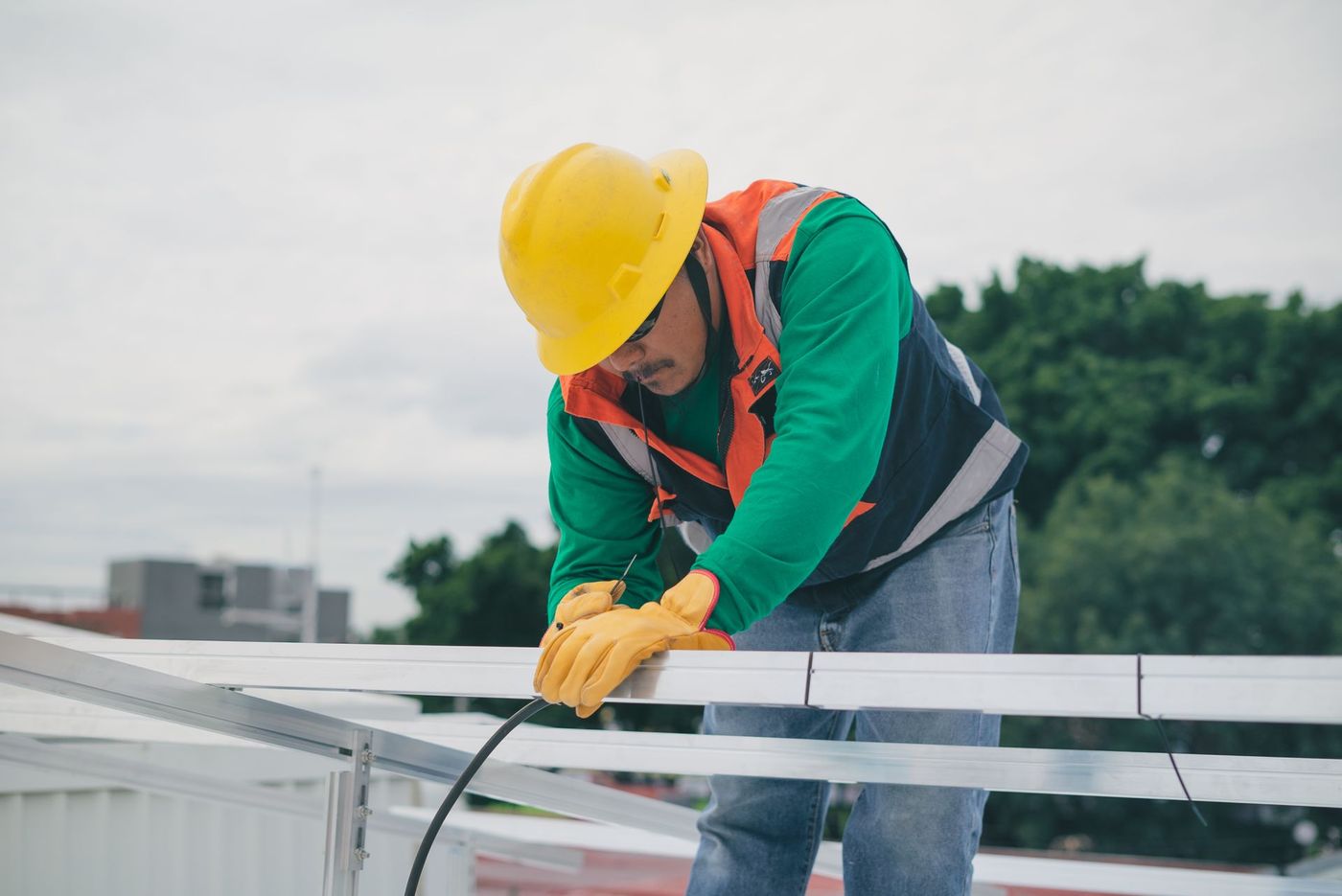
What a proper diagnostic covers
Good troubleshooting starts with evidence, not guesses. A real diagnostic usually works through the system in order: what the production history shows (your app data and your utility bills), what the inverter's own fault log recorded, and what a hands-on inspection finds on the roof and at the electrical panel. That order matters — the fault log often points straight at the failing part, and the roof inspection confirms it before anyone orders a replacement.
On the roof, the common finds are unglamorous: a connector that worked loose, wiring damaged by rodents, a panel with visible heat damage, or a string of panels taken down by one failed component. At the panel, it can be as simple as a tripped breaker or a failed disconnect. None of these need guesswork — they need someone willing to measure before quoting.
The faults behind most repair calls
Ground fault
Current is leaking where it should not — often damaged insulation or moisture in a junction box. The inverter shuts down to protect you, and it will keep shutting down until the leak is found and fixed.
Arc fault
The inverter detected electrical arcing, usually at a worn or loose connector. It is a safety shutdown, not a nuisance — arcing is a fire risk, so the cause has to be located, not just reset.
Grid errors
The inverter lost a clean connection to the utility grid, or the grid voltage/frequency drifted outside the allowed window. Sometimes that is the utility's side; sometimes it is the inverter's sensing or a failing relay.
One string or section down
Production drops by a chunk instead of stopping: one string of panels, one optimizer or one microinverter has failed, or something new is shading part of the roof.
Critter damage
Squirrels and other animals nest under arrays and chew wiring. The fix is the damaged wire plus, if you want it to stay fixed, screening that keeps them out of the array.
Looks dead, is not
Sometimes production is fine and only the monitoring or a display has failed. That is why the first check is always whether the system is making power, not whether the app says so.
Repair it or replace it?
Three questions decide most repair calls. First, is the failed part still available, or is there a compatible replacement? Second, is the component still under the manufacturer's warranty — if it is, the part itself may cost you nothing. Third, what is the honest remaining life of the rest of the system? Replacing a ten-year-old inverter on a healthy array usually makes sense; pouring money into a system with several failing parts may not. A straight answer lays out both paths with prices before any work starts — that is what to expect, and what to ask for if it is not offered.
Get help with your solar system
Prefer to talk? Call or text (626) 888-7237 (Mon–Sat, 6 AM–10 PM). Or send this form and the licensed local installer will get back to you.
Solar Rescue SoCal is an independent solar information and referral website. Service inquiries are referred to one licensed local installer, who performs all inspections, quoting and installation work.